



Spotlight
A selection of resources from across the Federation

Resource
2022 Annual Performance Report
Bridging to a new era.
Filter our resources by:


Resource
| 14 June 2026
Family Health House (FHH) Model in Afghanistan: An Impact Assessment
In Afghanistan, where conflict, distance, and social barriers continue to limit access to healthcare, community-based approaches remain essential to reaching women and families with lifesaving services. This impact assessment examines the Afghan Family Guidance Association's Family Health House (FHH) model and its role in bringing trusted reproductive health and maternal healthcare closer to Afghan women and families. Drawing on the experiences of clients, midwives, community leaders, and stakeholders across six provinces, the report demonstrates how a midwife-led, digitally enabled model can improve access, build community trust, and offer practical lessons for strengthening health systems in fragile settings.
Resource
| 14 June 2026
Family Health House (FHH) Model in Afghanistan: An Impact Assessment
In Afghanistan, where conflict, distance, and social barriers continue to limit access to healthcare, community-based approaches remain essential to reaching women and families with lifesaving services. This impact assessment examines the Afghan Family Guidance Association's Family Health House (FHH) model and its role in bringing trusted reproductive health and maternal healthcare closer to Afghan women and families. Drawing on the experiences of clients, midwives, community leaders, and stakeholders across six provinces, the report demonstrates how a midwife-led, digitally enabled model can improve access, build community trust, and offer practical lessons for strengthening health systems in fragile settings.
Resource
| 10 June 2026
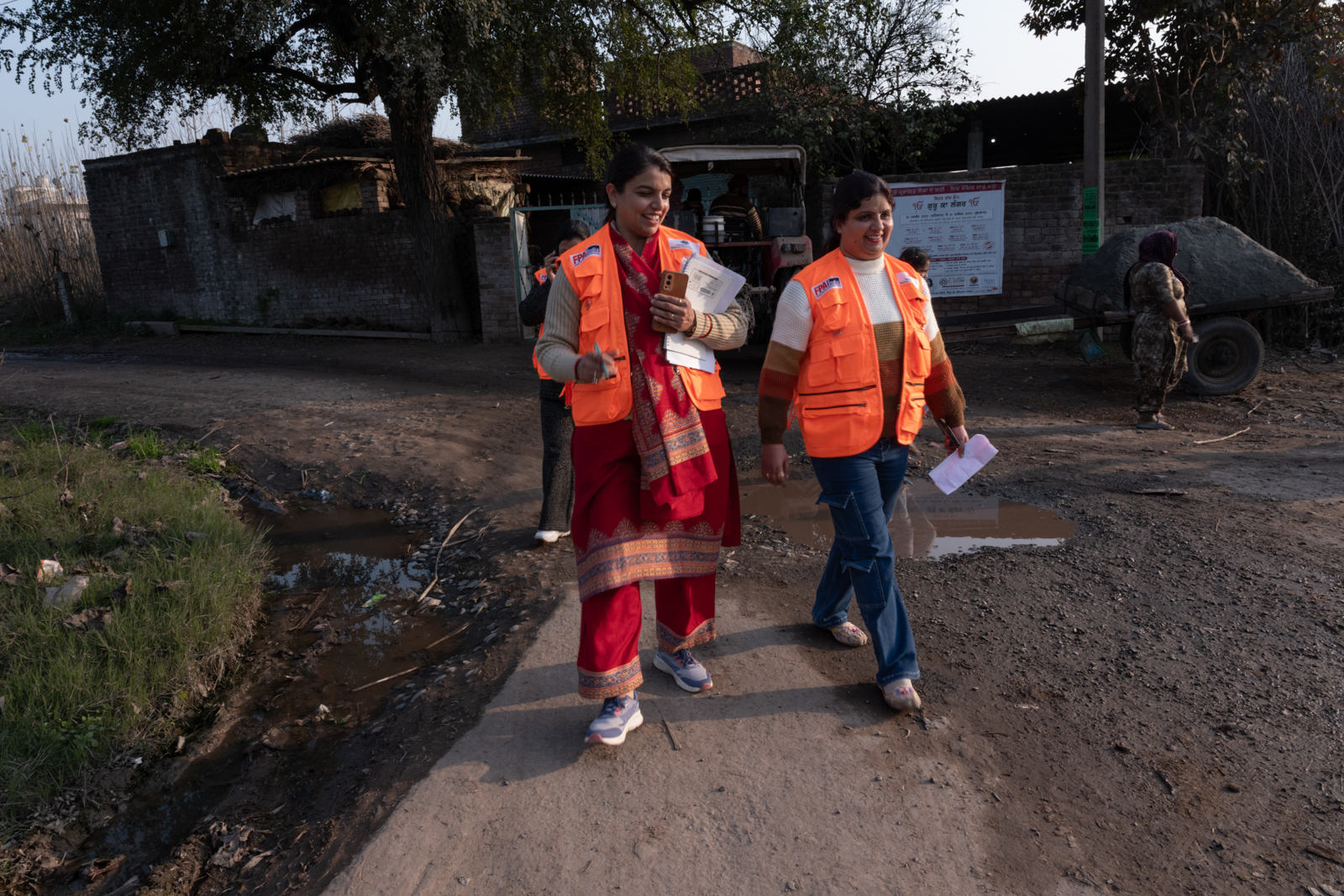
Fighting Back, Defending SRHRJ for All: Annual Performance Report 2025
In a year marked by shrinking civic spaces, humanitarian crises, funding cuts, and growing anti-rights movements, our Member Associations and Collaborative Partners continued to stand together in defence of sexual and reproductive health, rights, and justice. Our 2025 Annual Performance Report, "Fighting Back, Defending SRHRJ for All" captures the resilience, innovation, and solidarity that defined our work across South Asia. From delivering millions of essential sexual and and reproductive health services to strengthening youth leadership, humanitarian response, digital health innovation, and cross-movement partnerships, the report reflects our collective commitment to ensuring no one is left behind. Explore the stories, achievements, and partnerships driving our work, and why – even in the most challenging contexts – we continue fighting back.
Resource
| 14 June 2026
Fighting Back, Defending SRHRJ for All: Annual Performance Report 2025
In a year marked by shrinking civic spaces, humanitarian crises, funding cuts, and growing anti-rights movements, our Member Associations and Collaborative Partners continued to stand together in defence of sexual and reproductive health, rights, and justice. Our 2025 Annual Performance Report, "Fighting Back, Defending SRHRJ for All" captures the resilience, innovation, and solidarity that defined our work across South Asia. From delivering millions of essential sexual and and reproductive health services to strengthening youth leadership, humanitarian response, digital health innovation, and cross-movement partnerships, the report reflects our collective commitment to ensuring no one is left behind. Explore the stories, achievements, and partnerships driving our work, and why – even in the most challenging contexts – we continue fighting back.

Resource
| 27 October 2025
Strides for Reproductive Justice: Annual Progress Report 2024
2024 was a year of intensifying opposition, shrinking civic spaces, and deepening humanitarian crises. Yet our collective resilience shone through. Across South Asia, IPPF Member Associations stood firm, delivering essential sexual and reproductive health (SRH) services even in emergencies. We came together to strengthen a united movement in South Asia for sexual and reproductive justice at the ReproSex Conference in Colombo, while the first-of-its-kind Rainbow Help Desk in Bhutan by RENEW broke new ground in providing SGBV support to LGBTI+ communities. We deepened our solidarity with regional feminist, LGBTI+, and youth movements and expanded our partnerships to move resources closer to communities. In 2024, we - Provided 23.4 million SRH services across South Asia, including 7.38 million services for young people under 25 years - Reached 5.15 million clients, including 1.08 million people in humanitarian settings - Delivered comprehensive sexuality education to 372,645 young people I am pleased to share “Strides for Reproductive Justice”, the IPPF South Asia Region Annual Progress Report for 2024. Each achievement in the report is a testament to our shared vision of a world with sexual and reproductive health and rights for all. In solidarity, Tomoko Fukuda Regional Director (Interim) IPPF South Asia Region
Resource
| 27 October 2025
Strides for Reproductive Justice: Annual Progress Report 2024
2024 was a year of intensifying opposition, shrinking civic spaces, and deepening humanitarian crises. Yet our collective resilience shone through. Across South Asia, IPPF Member Associations stood firm, delivering essential sexual and reproductive health (SRH) services even in emergencies. We came together to strengthen a united movement in South Asia for sexual and reproductive justice at the ReproSex Conference in Colombo, while the first-of-its-kind Rainbow Help Desk in Bhutan by RENEW broke new ground in providing SGBV support to LGBTI+ communities. We deepened our solidarity with regional feminist, LGBTI+, and youth movements and expanded our partnerships to move resources closer to communities. In 2024, we - Provided 23.4 million SRH services across South Asia, including 7.38 million services for young people under 25 years - Reached 5.15 million clients, including 1.08 million people in humanitarian settings - Delivered comprehensive sexuality education to 372,645 young people I am pleased to share “Strides for Reproductive Justice”, the IPPF South Asia Region Annual Progress Report for 2024. Each achievement in the report is a testament to our shared vision of a world with sexual and reproductive health and rights for all. In solidarity, Tomoko Fukuda Regional Director (Interim) IPPF South Asia Region
Resource
| 07 July 2025
SEnopsis - An e-resource for Social Enterprises (SEs)
A solution to tackle the recent fund cuts affecting the Global South can be innovative social enterprises. As the global south reels under funding cuts and increasing push back from governments on advancing the sexual and reproductive health and rights of individuals and communities, the social enterprise model can play a critical role towards sustainability. IPPF’s dedicated e-resource on Social Enterprises (SEs) has been developed for Member Associations, Partners or any organisation which is actively engaged in or exploring SE initiatives. This handy resource is packed with practical tools, real-world examples, and inspiration to help you strengthen your sustainability efforts. Highlights from SEnopsis: 🔹 SE Business Models in Action – Strategies and SE models MAs have used to create self-sustaining SEs and impact at scale. 🔹 Case Studies: Learning from Each Other – Real-world challenges, navigation tactics, lessons learned from the MAs. 🔹 Market Research Recommendations – Insights from virtual SE-related studies to refine services and financial models. 🔹 Success Stories: Inspiration in Action – Celebrating MAs that have turned challenges into opportunities and delivered results for communities . Whether it’s refining an existing SE, developing a new concept, or looking for inspiration, the lessons and experiences shared in this edition can help build more resilient and impactful enterprises.

Resource
| 28 October 2024
One Voice for Choice: IPPF South Asia Regional Forum 2024
The Youth & Regional Forum for the IPPF South Asia Region, titled "One Voice for Choice," will take place from November 7 to November 9 in Colombo, Sri Lanka. Representatives and leaders from the eight member countries, along with secretariat staff, will gather to evaluate the progress made in fulfilling the commitments outlined in Strategy 2023-28 - Come Together. This forum also aims to strengthen our unified stance against the growing opposition and restrictions on bodily autonomy and the realization of Sexual and Reproductive Health and Rights (SRHR) in the region. Stay tuned for updates from the forum!
Resource
| 07 November 2024
One Voice for Choice: IPPF South Asia Regional Forum 2024
The Youth & Regional Forum for the IPPF South Asia Region, titled "One Voice for Choice," will take place from November 7 to November 9 in Colombo, Sri Lanka. Representatives and leaders from the eight member countries, along with secretariat staff, will gather to evaluate the progress made in fulfilling the commitments outlined in Strategy 2023-28 - Come Together. This forum also aims to strengthen our unified stance against the growing opposition and restrictions on bodily autonomy and the realization of Sexual and Reproductive Health and Rights (SRHR) in the region. Stay tuned for updates from the forum!
Resource
| 22 February 2024
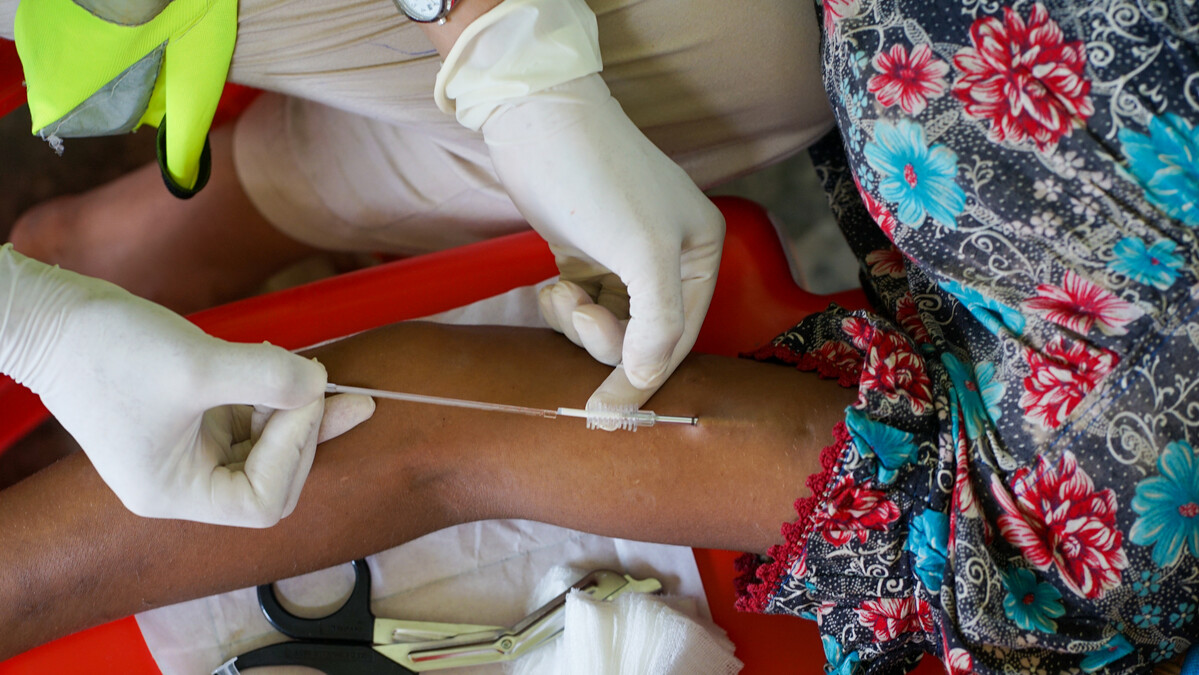
Choice Over Challenge
Evidence indicates that an estimated 163 million women worldwide face unmet needs for contraception, with the highest proportion of this occurring among women in Sub-Saharan Africa and South Asia. To address this pressing issue, it is imperative to prioritize the inclusion of a comprehensive range of contraceptive methods that cater to the diverse needs of women across various age groups. By ensuring a wide array of contraceptive options, we can significantly reduce the prevalence of unsatisfied demand and unmet needs among women globally. In a promising development, India recently announced the integration of contraceptive implants into its public health system, which was previously inaccessible and posed significant affordability challenges for Indian women. Monitoring data from clinics associated with the Family Planning Association of Nepal (FPAN, a member association of IPPF South Asia Region) indicates that a considerable number of Indian women, primarily from Bihar and Uttar Pradesh, cross the border seeking contraceptive implant services in Nepal’s Terai Region. However, beyond mere statistics, little is known about their experiences. Consequently, it is crucial to generate evidence by conducting an in-depth exploration of their cross-border journeys. To address this need, IPPF-South Asia Region and FPAN have collaboratively undertaken a cross-sectional exploratory multi-centric study adopting mixed-methods approach that combines quantitative and qualitative methodologies. Download the document to read the full study.
Resource
| 22 February 2024
Choice Over Challenge
Evidence indicates that an estimated 163 million women worldwide face unmet needs for contraception, with the highest proportion of this occurring among women in Sub-Saharan Africa and South Asia. To address this pressing issue, it is imperative to prioritize the inclusion of a comprehensive range of contraceptive methods that cater to the diverse needs of women across various age groups. By ensuring a wide array of contraceptive options, we can significantly reduce the prevalence of unsatisfied demand and unmet needs among women globally. In a promising development, India recently announced the integration of contraceptive implants into its public health system, which was previously inaccessible and posed significant affordability challenges for Indian women. Monitoring data from clinics associated with the Family Planning Association of Nepal (FPAN, a member association of IPPF South Asia Region) indicates that a considerable number of Indian women, primarily from Bihar and Uttar Pradesh, cross the border seeking contraceptive implant services in Nepal’s Terai Region. However, beyond mere statistics, little is known about their experiences. Consequently, it is crucial to generate evidence by conducting an in-depth exploration of their cross-border journeys. To address this need, IPPF-South Asia Region and FPAN have collaboratively undertaken a cross-sectional exploratory multi-centric study adopting mixed-methods approach that combines quantitative and qualitative methodologies. Download the document to read the full study.
Resource
| 14 June 2026
Family Health House (FHH) Model in Afghanistan: An Impact Assessment
In Afghanistan, where conflict, distance, and social barriers continue to limit access to healthcare, community-based approaches remain essential to reaching women and families with lifesaving services. This impact assessment examines the Afghan Family Guidance Association's Family Health House (FHH) model and its role in bringing trusted reproductive health and maternal healthcare closer to Afghan women and families. Drawing on the experiences of clients, midwives, community leaders, and stakeholders across six provinces, the report demonstrates how a midwife-led, digitally enabled model can improve access, build community trust, and offer practical lessons for strengthening health systems in fragile settings.
Resource
| 14 June 2026
Family Health House (FHH) Model in Afghanistan: An Impact Assessment
In Afghanistan, where conflict, distance, and social barriers continue to limit access to healthcare, community-based approaches remain essential to reaching women and families with lifesaving services. This impact assessment examines the Afghan Family Guidance Association's Family Health House (FHH) model and its role in bringing trusted reproductive health and maternal healthcare closer to Afghan women and families. Drawing on the experiences of clients, midwives, community leaders, and stakeholders across six provinces, the report demonstrates how a midwife-led, digitally enabled model can improve access, build community trust, and offer practical lessons for strengthening health systems in fragile settings.
Resource
| 10 June 2026
Fighting Back, Defending SRHRJ for All: Annual Performance Report 2025
In a year marked by shrinking civic spaces, humanitarian crises, funding cuts, and growing anti-rights movements, our Member Associations and Collaborative Partners continued to stand together in defence of sexual and reproductive health, rights, and justice. Our 2025 Annual Performance Report, "Fighting Back, Defending SRHRJ for All" captures the resilience, innovation, and solidarity that defined our work across South Asia. From delivering millions of essential sexual and and reproductive health services to strengthening youth leadership, humanitarian response, digital health innovation, and cross-movement partnerships, the report reflects our collective commitment to ensuring no one is left behind. Explore the stories, achievements, and partnerships driving our work, and why – even in the most challenging contexts – we continue fighting back.
Resource
| 14 June 2026
Fighting Back, Defending SRHRJ for All: Annual Performance Report 2025
In a year marked by shrinking civic spaces, humanitarian crises, funding cuts, and growing anti-rights movements, our Member Associations and Collaborative Partners continued to stand together in defence of sexual and reproductive health, rights, and justice. Our 2025 Annual Performance Report, "Fighting Back, Defending SRHRJ for All" captures the resilience, innovation, and solidarity that defined our work across South Asia. From delivering millions of essential sexual and and reproductive health services to strengthening youth leadership, humanitarian response, digital health innovation, and cross-movement partnerships, the report reflects our collective commitment to ensuring no one is left behind. Explore the stories, achievements, and partnerships driving our work, and why – even in the most challenging contexts – we continue fighting back.
Resource
| 27 October 2025
Strides for Reproductive Justice: Annual Progress Report 2024
2024 was a year of intensifying opposition, shrinking civic spaces, and deepening humanitarian crises. Yet our collective resilience shone through. Across South Asia, IPPF Member Associations stood firm, delivering essential sexual and reproductive health (SRH) services even in emergencies. We came together to strengthen a united movement in South Asia for sexual and reproductive justice at the ReproSex Conference in Colombo, while the first-of-its-kind Rainbow Help Desk in Bhutan by RENEW broke new ground in providing SGBV support to LGBTI+ communities. We deepened our solidarity with regional feminist, LGBTI+, and youth movements and expanded our partnerships to move resources closer to communities. In 2024, we - Provided 23.4 million SRH services across South Asia, including 7.38 million services for young people under 25 years - Reached 5.15 million clients, including 1.08 million people in humanitarian settings - Delivered comprehensive sexuality education to 372,645 young people I am pleased to share “Strides for Reproductive Justice”, the IPPF South Asia Region Annual Progress Report for 2024. Each achievement in the report is a testament to our shared vision of a world with sexual and reproductive health and rights for all. In solidarity, Tomoko Fukuda Regional Director (Interim) IPPF South Asia Region
Resource
| 27 October 2025
Strides for Reproductive Justice: Annual Progress Report 2024
2024 was a year of intensifying opposition, shrinking civic spaces, and deepening humanitarian crises. Yet our collective resilience shone through. Across South Asia, IPPF Member Associations stood firm, delivering essential sexual and reproductive health (SRH) services even in emergencies. We came together to strengthen a united movement in South Asia for sexual and reproductive justice at the ReproSex Conference in Colombo, while the first-of-its-kind Rainbow Help Desk in Bhutan by RENEW broke new ground in providing SGBV support to LGBTI+ communities. We deepened our solidarity with regional feminist, LGBTI+, and youth movements and expanded our partnerships to move resources closer to communities. In 2024, we - Provided 23.4 million SRH services across South Asia, including 7.38 million services for young people under 25 years - Reached 5.15 million clients, including 1.08 million people in humanitarian settings - Delivered comprehensive sexuality education to 372,645 young people I am pleased to share “Strides for Reproductive Justice”, the IPPF South Asia Region Annual Progress Report for 2024. Each achievement in the report is a testament to our shared vision of a world with sexual and reproductive health and rights for all. In solidarity, Tomoko Fukuda Regional Director (Interim) IPPF South Asia Region
Resource
| 07 July 2025
SEnopsis - An e-resource for Social Enterprises (SEs)
A solution to tackle the recent fund cuts affecting the Global South can be innovative social enterprises. As the global south reels under funding cuts and increasing push back from governments on advancing the sexual and reproductive health and rights of individuals and communities, the social enterprise model can play a critical role towards sustainability. IPPF’s dedicated e-resource on Social Enterprises (SEs) has been developed for Member Associations, Partners or any organisation which is actively engaged in or exploring SE initiatives. This handy resource is packed with practical tools, real-world examples, and inspiration to help you strengthen your sustainability efforts. Highlights from SEnopsis: 🔹 SE Business Models in Action – Strategies and SE models MAs have used to create self-sustaining SEs and impact at scale. 🔹 Case Studies: Learning from Each Other – Real-world challenges, navigation tactics, lessons learned from the MAs. 🔹 Market Research Recommendations – Insights from virtual SE-related studies to refine services and financial models. 🔹 Success Stories: Inspiration in Action – Celebrating MAs that have turned challenges into opportunities and delivered results for communities . Whether it’s refining an existing SE, developing a new concept, or looking for inspiration, the lessons and experiences shared in this edition can help build more resilient and impactful enterprises.
Resource
| 28 October 2024
One Voice for Choice: IPPF South Asia Regional Forum 2024
The Youth & Regional Forum for the IPPF South Asia Region, titled "One Voice for Choice," will take place from November 7 to November 9 in Colombo, Sri Lanka. Representatives and leaders from the eight member countries, along with secretariat staff, will gather to evaluate the progress made in fulfilling the commitments outlined in Strategy 2023-28 - Come Together. This forum also aims to strengthen our unified stance against the growing opposition and restrictions on bodily autonomy and the realization of Sexual and Reproductive Health and Rights (SRHR) in the region. Stay tuned for updates from the forum!
Resource
| 07 November 2024
One Voice for Choice: IPPF South Asia Regional Forum 2024
The Youth & Regional Forum for the IPPF South Asia Region, titled "One Voice for Choice," will take place from November 7 to November 9 in Colombo, Sri Lanka. Representatives and leaders from the eight member countries, along with secretariat staff, will gather to evaluate the progress made in fulfilling the commitments outlined in Strategy 2023-28 - Come Together. This forum also aims to strengthen our unified stance against the growing opposition and restrictions on bodily autonomy and the realization of Sexual and Reproductive Health and Rights (SRHR) in the region. Stay tuned for updates from the forum!
Resource
| 22 February 2024
Choice Over Challenge
Evidence indicates that an estimated 163 million women worldwide face unmet needs for contraception, with the highest proportion of this occurring among women in Sub-Saharan Africa and South Asia. To address this pressing issue, it is imperative to prioritize the inclusion of a comprehensive range of contraceptive methods that cater to the diverse needs of women across various age groups. By ensuring a wide array of contraceptive options, we can significantly reduce the prevalence of unsatisfied demand and unmet needs among women globally. In a promising development, India recently announced the integration of contraceptive implants into its public health system, which was previously inaccessible and posed significant affordability challenges for Indian women. Monitoring data from clinics associated with the Family Planning Association of Nepal (FPAN, a member association of IPPF South Asia Region) indicates that a considerable number of Indian women, primarily from Bihar and Uttar Pradesh, cross the border seeking contraceptive implant services in Nepal’s Terai Region. However, beyond mere statistics, little is known about their experiences. Consequently, it is crucial to generate evidence by conducting an in-depth exploration of their cross-border journeys. To address this need, IPPF-South Asia Region and FPAN have collaboratively undertaken a cross-sectional exploratory multi-centric study adopting mixed-methods approach that combines quantitative and qualitative methodologies. Download the document to read the full study.
Resource
| 22 February 2024
Choice Over Challenge
Evidence indicates that an estimated 163 million women worldwide face unmet needs for contraception, with the highest proportion of this occurring among women in Sub-Saharan Africa and South Asia. To address this pressing issue, it is imperative to prioritize the inclusion of a comprehensive range of contraceptive methods that cater to the diverse needs of women across various age groups. By ensuring a wide array of contraceptive options, we can significantly reduce the prevalence of unsatisfied demand and unmet needs among women globally. In a promising development, India recently announced the integration of contraceptive implants into its public health system, which was previously inaccessible and posed significant affordability challenges for Indian women. Monitoring data from clinics associated with the Family Planning Association of Nepal (FPAN, a member association of IPPF South Asia Region) indicates that a considerable number of Indian women, primarily from Bihar and Uttar Pradesh, cross the border seeking contraceptive implant services in Nepal’s Terai Region. However, beyond mere statistics, little is known about their experiences. Consequently, it is crucial to generate evidence by conducting an in-depth exploration of their cross-border journeys. To address this need, IPPF-South Asia Region and FPAN have collaboratively undertaken a cross-sectional exploratory multi-centric study adopting mixed-methods approach that combines quantitative and qualitative methodologies. Download the document to read the full study.
