



Articles about Bangladesh

07 April 2025
Is Legal Recognition Enough for Reproductive Justice?
Over the years, the female sex workers of Bangladesh have seen the landscape of their profession change significantly. From derogatory labels in the pre-colonial and colonial times to now being legally recognized as sex workers. However, their legal recognition and rights only exist on paper. Sex workers in Bangladesh have little to no access to social, economic and legal resources. In Bangladesh, sex work is partially criminalized. While selling sex in private is legal, publicly soliciting clients and procuring sex workers remains illegal. Third party involvement i.e., the importing, exporting, hiring or selling women for sex work by pimps is a criminal offense. However, paying for sex itself is not against the law. This legal ambiguity, in addition to vagrancy laws, leave sex workers in the country vulnerable to harassment and prosecution. Zoya, who is the founder of Bonchita, a brothel-based sex workers collective, and a community volunteer of the Population Services and Training Centre (PSTC) in Bangladesh, says “The presence of 110 brothels has now shrunk to 11." This could be linked to the rule which demands the brothels to obtain an affidavit for police verification, which has been put into place to prevent trafficking. Sex trafficking remains a pervasive issue not just in Bangladesh, but in South Asia - driven by poverty, gender inequality, weak law enforcement, and cross-border vulnerabilities. Women and children are frequently trafficked not just within Bangladesh, but across borders to India, Nepal, and other neighbouring countries. Trafficked persons are often lured with false promises of employment or marriage, only to be forced into sex work. In addition to legal barriers, sex workers in Bangladesh like in many other South Asian countries, face social exclusion because of perceptions rooted in religious and patriarchal beliefs. Zoya, who is a #GotToBreakFree activist, has been vocally advocating for dismantling the endless cycle of violence against sex workers and their families, that has persisted regardless of political or social shifts, The children of female sex workers in Bangladesh go to schools, to break the cycle of generational stigma and poverty, but they too are discriminated against and excluded, by other students and often by school authorities as well. Zoya firmly states that “the nation has not yet accepted sex workers as equal citizens”. This exclusion takes different forms. For example, sex workers cannot organise publicly on the streets. The now existing brothels are also all constantly on the verge of demolition and their closure means many sex workers will be forced into street-based and hotel-based sex work, further exposing them to violence, discrimination and exploitation from intermediaries. “The sex workers in Bangladesh, especially women, are stuck in an endless cycle of lifelong violence – violence from the state, society and at our workplace. Our consent is taken for granted and violence is an everyday reality for us.” she adds.
12 February 2025
USAID Funding Freeze Threatens Reproductive Justice in Bangladesh
The Impact of the USAID Funding Freeze on South Asia The recent freeze on the United States Agency for International Development (USAID) funding worldwide for 90 days by the American President Donald Trump will have a direct impact on the lives and dignity of millions of people across the globe. The top receivers of economic aid in South Asia, Afghanistan and Bangladesh are believed to be the most impacted in the region. Over the years since its independence, Bangladesh’s progress in poverty reduction, education, and healthcare has been strengthened through national initiatives as well as foreign aid. The freeze on all USAID funding threatens to undo decades of progress made in sexual and reproductive health and rights in the country. According to UNFPA, nearly 600,000 people, including Rohingya refugees, could lose access to critical maternal and reproductive health services. In Cox's Bazar, the refugee camp complex where more than one million Rohingya refugees reside, international aid has supported nearly half of all births taking place in health facilities. Progress towards sexual and reproductive rights in the country made possible by civil society organizations and communities, now stands at the risk of collapse. Millions in Bangladesh Stand to Lose Access to Essential SRH Services The impact of the funding freeze on our partner organizations in Bangladesh has been immediate and severe. One of our partners, working towards improving the sexual and reproductive health and rights (SRHR) of diverse communities in Bangladesh, has seen the suspension of two of their programs which will affect 13,000 people from diverse communities across eight divisions, and 2,400 young gender-diverse people across 18 districts. These aren't just numbers – this means communities that have long been marginalized and excluded from mainstream healthcare systems will lose access to essential sexual and reproductive health services. Dr Noor Mohammed, Executive Director of the Population Services and Training Centre (PSTC), adds, “These funding cuts will have far-reaching consequences for Bangladesh. We are facing the immediate suspension of programs that serve over 1.6 million families across eight districts.” PSTC’s innovative sustainable health development program, which supports over 6.6 million people, and 643 women entrepreneurs has also come to a halt.

04 May 2023
Call for Expressions of Interest for implementing activities for IPPF in Bangladesh
We are seeking applications from national Civil Society Organizations (CSOs), Community Based Organizations (CBOs), and private not for profit institutions working in SRHR, based in Bangladesh. We encourage all potential applicants to review these points carefully before applying, to make sure they meet the critical eligibility criteria. Applicant organizations must: • Be a national NGOs/CBOs/CSOs working on SRHR related issues (including SRHR programs and/or services and/or advocacy). • Be based, operating, and registered as a national not for profit organization in Bangladesh. • Align with IPPF’s vision, mission and core values. • Have a strongly proven ability of financial solvency and accountability. • Have been operating relevant activities in SRHR for at least two years. • Have or have ambition for a wide geographical presence in country. • Have a focus on youth and other marginalised or hard-to-reach and underserved populations. • Be willing to undergo desk-based and field-based assessments (on their governance, programs, finance, communication, advocacy, and related management systems) and to submit evidence to IPPF. • The organization with prior sub-granting experience, will be considered an additional asset. • The organization's prior experience of working with community networks or groups will be considered an asset. For more information contact [email protected]. Download application template here. Frequently Asked Questions Q. We operate through our affiliate partner in Dhaka; can we be the lead agency with central project team out of Bangladesh and on ground implementation in Bangladesh? A. Bangladesh registered and based organisations will only be eligible to apply as an implementation partner. Q. Please help us understand the number of locations /project areas in Bangladesh where the community touch points are required. A. We are looking at an organisation wherein applying organisation’s reach could be whole of Bangladesh or some divisions/districts/sub-districts of Bangladesh. Q. We are registered as a for ‘Profit entity’ – are we eligible to participate in this bid; typically, we work with Not for Profits through a service contract. A. Yes, you can apply, however, selection will be based on a competitive process and organisation fulfilling criteria as mentioned in the call for expression. Q. Does the application have to be made by a single/sole organisation? Or would a consortium (multiple organisations partnering together) be allowed to apply with one lead and multiple partners? A. Yes, you can apply either singly or through consortium – mentioning which organisation will be lead organisation, however, selection will be based on a competitive process. Q. In case of a consortium being allowed, do all the consortium partners need to fully meet the mentioned eligibility criteria? Or is this only applicable for the lead organisation of the consortium? A. Lead organization can apply, and it is necessary for the lead organization to fulfil all the requirements. Q. Can documents be shared through google doc rather than hyperlink? A. Apart from sharing documents through email, organizations can share the documents on/before the timeline through either of the format e.g.: google drive, v-transfer, ftp, drop box etc. Kindly ensure that appropriate access is provided to us to retrieve the documents shared through any of the drives. Q. What is the deadline for submission of application? A. Applications will be accepted till 11.59 pm Bangladesh time on May 23rd, 2023.

31 March 2017
SPRINT: Sexual and reproductive health in crisis and post-crisis situations
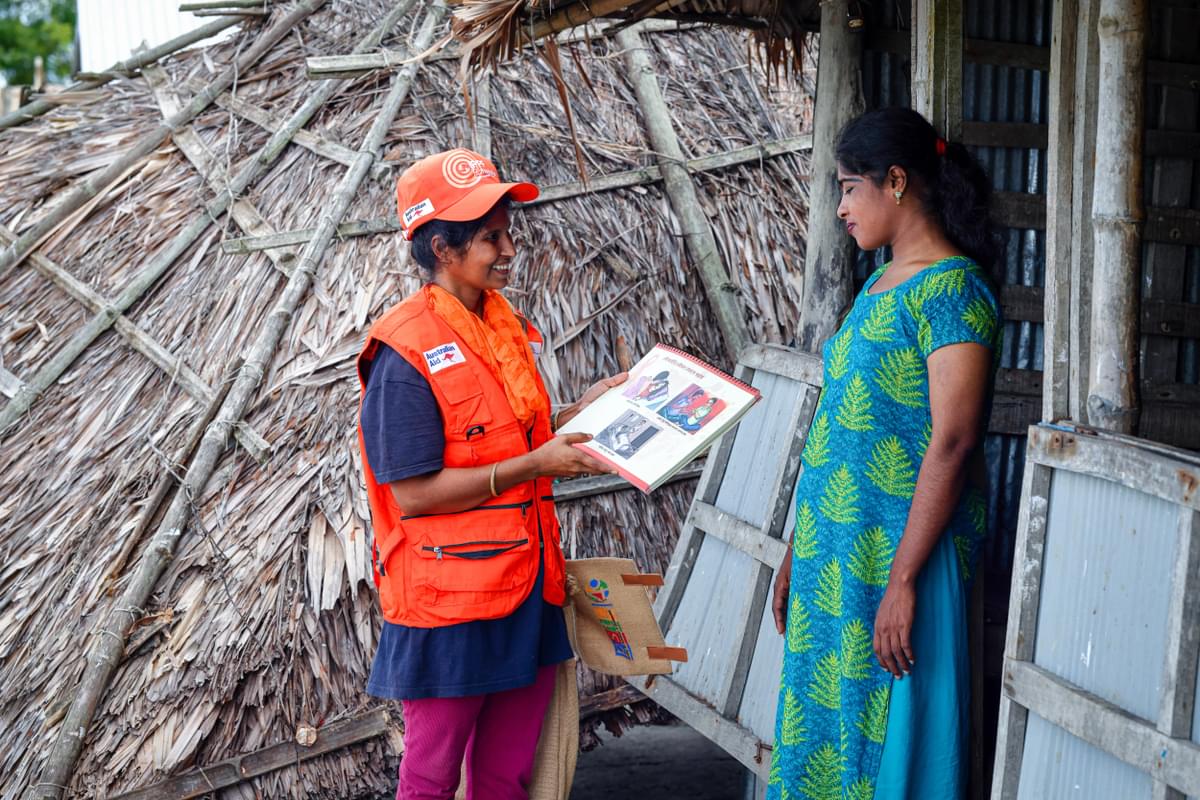
The SPRINT Initiative provides one of the most important aspects of humanitarian assistance that is often forgotten when disaster and conflicts strike: access to essential life-saving sexual and reproductive health services. We build capacity of humanitarian workers to deliver essential life-saving sexual and reproductive health services in crisis and post-crisis situations through the delivery of the Minimum Initial Service Package (SRH) for reproductive health in emergencies. Through funding from the Australian Government's Department of Foreign Affairs and Trade (DFAT) our SPRINT Initiative has brought sexual and reproductive health to the humanitarian agenda, increased capacity and responded to a number of humanitarian emergencies. Australia has funded the SPRINT initiative since 2007 and has supported reaching 1,138,175 people to date and continues to respond to ongoing emergencies. In each priority country, we work with an IPPF Member Association to coordinate and implement SPRINT activities. Through these partnerships, SPRINT helps strengthen the enabling environment, improve national capacity and provide lifesaving services during times of crisis. You can read more about the SPRINT Initiative and IPPF Humanitarian’s Programme here. Australian Government's Department of Foreign Affairs and Trade (DFAT) Australia's location in the Indo-Pacific provides us with a unique perspective on humanitarian action. Australia is committed to helping partner governments manage crisis response themselves. This is done through building the capacity of the national government and civil society to be able to respond to disaster. DFAT also works with experienced international partners to prepare for and respond to disasters, including other donors, United Nations agencies, the International Red Cross and Red Crescent Movement and non-government organisations.
30 June 2016
Girls Decide
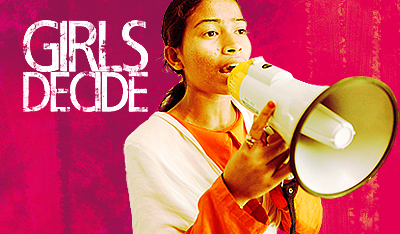
This programme addresses critical challenges faced by young women around sexual health and sexuality. It has produced a range of advocacy, education and informational materials to support research, awareness-raising, advocacy and service delivery. Girls Decide is about the sexual and reproductive health and rights of girls and young women. Around the world, girls aged 10 to 19 account for 23% of all disease associated with pregnancy and childbirth. An estimated 2.5 million have unsafe abortions every year. Worldwide, young women account for 60% of the 5.5 million young people living with HIV and/or AIDS. Girls Decide has produced a range of advocacy, education and informational materials to support work to improve sexual health and rights for girls and young women. These include a series of films on sexual and reproductive health decisions faced by 6 young women in 6 different countries. The films won the prestigious International Video and Communications Award (IVCA). When girls and young women have access to critical lifesaving services and information, and when they are able to make meaningful choices about their life path, they are empowered. Their quality of life improves, as does the well-being of their families and the communities in which they live. Their collective ability to achieve internationally agreed development goals is strengthened. Almost all IPPF Member Associations provide services to young people and 1 in every 3 clients is a young person below the age of 25. All young women and girls are rights-holders and are entitled to sexual and reproductive rights. As a matter of principle, the IPPF Secretariat and Member Associations stand by girls by respecting and fulfilling their right to high quality services; they stand up for girls by supporting them in making their own decisions related to sexuality and pregnancy; they stand for sexual and reproductive rights by addressing the challenges faced by young women and girls at local, national and international levels.
07 April 2025
Is Legal Recognition Enough for Reproductive Justice?
Over the years, the female sex workers of Bangladesh have seen the landscape of their profession change significantly. From derogatory labels in the pre-colonial and colonial times to now being legally recognized as sex workers. However, their legal recognition and rights only exist on paper. Sex workers in Bangladesh have little to no access to social, economic and legal resources. In Bangladesh, sex work is partially criminalized. While selling sex in private is legal, publicly soliciting clients and procuring sex workers remains illegal. Third party involvement i.e., the importing, exporting, hiring or selling women for sex work by pimps is a criminal offense. However, paying for sex itself is not against the law. This legal ambiguity, in addition to vagrancy laws, leave sex workers in the country vulnerable to harassment and prosecution. Zoya, who is the founder of Bonchita, a brothel-based sex workers collective, and a community volunteer of the Population Services and Training Centre (PSTC) in Bangladesh, says “The presence of 110 brothels has now shrunk to 11." This could be linked to the rule which demands the brothels to obtain an affidavit for police verification, which has been put into place to prevent trafficking. Sex trafficking remains a pervasive issue not just in Bangladesh, but in South Asia - driven by poverty, gender inequality, weak law enforcement, and cross-border vulnerabilities. Women and children are frequently trafficked not just within Bangladesh, but across borders to India, Nepal, and other neighbouring countries. Trafficked persons are often lured with false promises of employment or marriage, only to be forced into sex work. In addition to legal barriers, sex workers in Bangladesh like in many other South Asian countries, face social exclusion because of perceptions rooted in religious and patriarchal beliefs. Zoya, who is a #GotToBreakFree activist, has been vocally advocating for dismantling the endless cycle of violence against sex workers and their families, that has persisted regardless of political or social shifts, The children of female sex workers in Bangladesh go to schools, to break the cycle of generational stigma and poverty, but they too are discriminated against and excluded, by other students and often by school authorities as well. Zoya firmly states that “the nation has not yet accepted sex workers as equal citizens”. This exclusion takes different forms. For example, sex workers cannot organise publicly on the streets. The now existing brothels are also all constantly on the verge of demolition and their closure means many sex workers will be forced into street-based and hotel-based sex work, further exposing them to violence, discrimination and exploitation from intermediaries. “The sex workers in Bangladesh, especially women, are stuck in an endless cycle of lifelong violence – violence from the state, society and at our workplace. Our consent is taken for granted and violence is an everyday reality for us.” she adds.
12 February 2025
USAID Funding Freeze Threatens Reproductive Justice in Bangladesh
The Impact of the USAID Funding Freeze on South Asia The recent freeze on the United States Agency for International Development (USAID) funding worldwide for 90 days by the American President Donald Trump will have a direct impact on the lives and dignity of millions of people across the globe. The top receivers of economic aid in South Asia, Afghanistan and Bangladesh are believed to be the most impacted in the region. Over the years since its independence, Bangladesh’s progress in poverty reduction, education, and healthcare has been strengthened through national initiatives as well as foreign aid. The freeze on all USAID funding threatens to undo decades of progress made in sexual and reproductive health and rights in the country. According to UNFPA, nearly 600,000 people, including Rohingya refugees, could lose access to critical maternal and reproductive health services. In Cox's Bazar, the refugee camp complex where more than one million Rohingya refugees reside, international aid has supported nearly half of all births taking place in health facilities. Progress towards sexual and reproductive rights in the country made possible by civil society organizations and communities, now stands at the risk of collapse. Millions in Bangladesh Stand to Lose Access to Essential SRH Services The impact of the funding freeze on our partner organizations in Bangladesh has been immediate and severe. One of our partners, working towards improving the sexual and reproductive health and rights (SRHR) of diverse communities in Bangladesh, has seen the suspension of two of their programs which will affect 13,000 people from diverse communities across eight divisions, and 2,400 young gender-diverse people across 18 districts. These aren't just numbers – this means communities that have long been marginalized and excluded from mainstream healthcare systems will lose access to essential sexual and reproductive health services. Dr Noor Mohammed, Executive Director of the Population Services and Training Centre (PSTC), adds, “These funding cuts will have far-reaching consequences for Bangladesh. We are facing the immediate suspension of programs that serve over 1.6 million families across eight districts.” PSTC’s innovative sustainable health development program, which supports over 6.6 million people, and 643 women entrepreneurs has also come to a halt.
04 May 2023
Call for Expressions of Interest for implementing activities for IPPF in Bangladesh
We are seeking applications from national Civil Society Organizations (CSOs), Community Based Organizations (CBOs), and private not for profit institutions working in SRHR, based in Bangladesh. We encourage all potential applicants to review these points carefully before applying, to make sure they meet the critical eligibility criteria. Applicant organizations must: • Be a national NGOs/CBOs/CSOs working on SRHR related issues (including SRHR programs and/or services and/or advocacy). • Be based, operating, and registered as a national not for profit organization in Bangladesh. • Align with IPPF’s vision, mission and core values. • Have a strongly proven ability of financial solvency and accountability. • Have been operating relevant activities in SRHR for at least two years. • Have or have ambition for a wide geographical presence in country. • Have a focus on youth and other marginalised or hard-to-reach and underserved populations. • Be willing to undergo desk-based and field-based assessments (on their governance, programs, finance, communication, advocacy, and related management systems) and to submit evidence to IPPF. • The organization with prior sub-granting experience, will be considered an additional asset. • The organization's prior experience of working with community networks or groups will be considered an asset. For more information contact [email protected]. Download application template here. Frequently Asked Questions Q. We operate through our affiliate partner in Dhaka; can we be the lead agency with central project team out of Bangladesh and on ground implementation in Bangladesh? A. Bangladesh registered and based organisations will only be eligible to apply as an implementation partner. Q. Please help us understand the number of locations /project areas in Bangladesh where the community touch points are required. A. We are looking at an organisation wherein applying organisation’s reach could be whole of Bangladesh or some divisions/districts/sub-districts of Bangladesh. Q. We are registered as a for ‘Profit entity’ – are we eligible to participate in this bid; typically, we work with Not for Profits through a service contract. A. Yes, you can apply, however, selection will be based on a competitive process and organisation fulfilling criteria as mentioned in the call for expression. Q. Does the application have to be made by a single/sole organisation? Or would a consortium (multiple organisations partnering together) be allowed to apply with one lead and multiple partners? A. Yes, you can apply either singly or through consortium – mentioning which organisation will be lead organisation, however, selection will be based on a competitive process. Q. In case of a consortium being allowed, do all the consortium partners need to fully meet the mentioned eligibility criteria? Or is this only applicable for the lead organisation of the consortium? A. Lead organization can apply, and it is necessary for the lead organization to fulfil all the requirements. Q. Can documents be shared through google doc rather than hyperlink? A. Apart from sharing documents through email, organizations can share the documents on/before the timeline through either of the format e.g.: google drive, v-transfer, ftp, drop box etc. Kindly ensure that appropriate access is provided to us to retrieve the documents shared through any of the drives. Q. What is the deadline for submission of application? A. Applications will be accepted till 11.59 pm Bangladesh time on May 23rd, 2023.
31 March 2017
SPRINT: Sexual and reproductive health in crisis and post-crisis situations
The SPRINT Initiative provides one of the most important aspects of humanitarian assistance that is often forgotten when disaster and conflicts strike: access to essential life-saving sexual and reproductive health services. We build capacity of humanitarian workers to deliver essential life-saving sexual and reproductive health services in crisis and post-crisis situations through the delivery of the Minimum Initial Service Package (SRH) for reproductive health in emergencies. Through funding from the Australian Government's Department of Foreign Affairs and Trade (DFAT) our SPRINT Initiative has brought sexual and reproductive health to the humanitarian agenda, increased capacity and responded to a number of humanitarian emergencies. Australia has funded the SPRINT initiative since 2007 and has supported reaching 1,138,175 people to date and continues to respond to ongoing emergencies. In each priority country, we work with an IPPF Member Association to coordinate and implement SPRINT activities. Through these partnerships, SPRINT helps strengthen the enabling environment, improve national capacity and provide lifesaving services during times of crisis. You can read more about the SPRINT Initiative and IPPF Humanitarian’s Programme here. Australian Government's Department of Foreign Affairs and Trade (DFAT) Australia's location in the Indo-Pacific provides us with a unique perspective on humanitarian action. Australia is committed to helping partner governments manage crisis response themselves. This is done through building the capacity of the national government and civil society to be able to respond to disaster. DFAT also works with experienced international partners to prepare for and respond to disasters, including other donors, United Nations agencies, the International Red Cross and Red Crescent Movement and non-government organisations.
30 June 2016
Girls Decide
This programme addresses critical challenges faced by young women around sexual health and sexuality. It has produced a range of advocacy, education and informational materials to support research, awareness-raising, advocacy and service delivery. Girls Decide is about the sexual and reproductive health and rights of girls and young women. Around the world, girls aged 10 to 19 account for 23% of all disease associated with pregnancy and childbirth. An estimated 2.5 million have unsafe abortions every year. Worldwide, young women account for 60% of the 5.5 million young people living with HIV and/or AIDS. Girls Decide has produced a range of advocacy, education and informational materials to support work to improve sexual health and rights for girls and young women. These include a series of films on sexual and reproductive health decisions faced by 6 young women in 6 different countries. The films won the prestigious International Video and Communications Award (IVCA). When girls and young women have access to critical lifesaving services and information, and when they are able to make meaningful choices about their life path, they are empowered. Their quality of life improves, as does the well-being of their families and the communities in which they live. Their collective ability to achieve internationally agreed development goals is strengthened. Almost all IPPF Member Associations provide services to young people and 1 in every 3 clients is a young person below the age of 25. All young women and girls are rights-holders and are entitled to sexual and reproductive rights. As a matter of principle, the IPPF Secretariat and Member Associations stand by girls by respecting and fulfilling their right to high quality services; they stand up for girls by supporting them in making their own decisions related to sexuality and pregnancy; they stand for sexual and reproductive rights by addressing the challenges faced by young women and girls at local, national and international levels.