



IPPF works to ensure that every woman and girl has the human right to choose to be pregnant or not and we will continue to supply and support safe and legal abortion services and care. We are committed to reducing the number of deaths of women and girls who are forced to turn to unsafe abortion methods. Make Abortion Safe. Make Abortion Legal. For all Women and Girls. Everywhere.
Articles about Abortion Care

28 September 2025
Beyond Borders: Abortion Laws, Rights and Realities in South Asia
Safe abortion is essential healthcare and integral to a person’s sexual and reproductive health and rights (SRHR). When people have access to safe, timely and stigma-free abortion services, the risk of complications is greatly reduced. Abortion is safe, when carried out using World Health Organization–recommended methods. In South Asia, unsafe abortion is a major public health and human rights issue. As per the Guttmacher Institute, in Southern and Central Asia together, less than half of abortions are safe. Access to safe abortion services is further complicated by South Asia’s patchwork of laws, commonly situated under criminal law. Abortion regulations in South Asia range from relatively liberal laws in India and Nepal, restrictive laws in Bhutan, Pakistan and Sri Lanka. Innovative ways of regulating abortion like Bangladesh’s menstrual regulation policy, sits outside the legal framework on abortion. Abortion in South Asia: How does legal regulation look like? Taking a closer look at the regional legal landscape shows why access varies so widely. India amended the Medical Termination of Pregnancy law in 2021, expanding gestational limits for certain categories and easing some clinical rules. In 2022, a Supreme Court judgement ruled that unmarried women should have the same right to access abortion. However, abortion remains framed as a crime under the Bhartiya Nyaya Sanhita, 2023 (India’s penal law), with statutory exceptions. Abortion continues to operate under a carceral approach instead of being seen as fundamental right and a necessary healthcare service on request. Courts have sometimes stepped in to approve exceptions in difficult cases, though their approach has been inconsistent and recent judgments have rolled back earlier gains. Nepal took a progressive step in the region by legalising abortion with conditions in 2002, and later strengthened the reproductive health law under the Safe Motherhood and Reproductive Health Rights (SMRHR) Act 2018. Nepal’s Constitution too, encodes a woman’s fundamental right to reproductive health. Yet, penal provisions have not been fully removed from the National Penal Code 2017, and abortion seekers and service providers still face criminal penalties. Legal ambiguity and inconsistencies between the SMRHR Act and Penal Code continue to deprive abortion seekers from accessing safe abortion services and exercising their right to health, life and bodily autonomy. Civil society and safe abortion advocates in Nepal now call for full decriminalization, arguing that abortion is essential healthcare and a right. Bangladesh presents an interesting policy workaround. Under the Penal Code of 1860, induced abortion is only permissible to save a woman’s life, but the national family planning programme allows “menstrual regulation” (MR). The MR policy allows early termination, i.e., up to 12 weeks, without calling abortion. Framing MR as distinct from abortion has had pragmatic benefits, but access is uneven and many still resort to unsafe methods. Abortion in Bhutan, Maldives, Sri Lanka and Pakistan remains tightly restricted. Sri Lanka’s penal code criminalizes unlawful termination except to save a woman’s life, and repeated reform attempts to expand the exceptions have failed. Bhutan allows abortion under narrow grounds such as rape or risk to the woman’s life; Maldives permits abortion mainly to save a woman’s life and in cases of rape or incest under its penal code. Pakistan’s criminal code criminalises abortion except to save the life of woman or for “necessary treatment” before the organs of the foetus are formed.

28 May 2025
Neo-Colonialism by Policy: The Global Gag Rule's Impact on South Asian Reproductive Healthcare
Sexual and reproductive health equity is central to health equity—because sexual and reproductive coercion has always been a tool of patriarchal oppression. In the wake of the Trump administration reinstating the Global Gag Rule, we’re reminded of the profound inequities that persist in the global health landscape and how the Global South continues to bear the brunt of neo-colonial laws and policies to exert control over racialised bodies. The Global Gag Rule: A Cycle of Control The Global Gag Rule (GGR), also known as the Mexico City Policy, is not new to safe abortion advocates and providers. It was first implemented by the Reagan administration in 1985 and has followed a predictable pattern of being rescinded under Democratic presidents; reinstated under Republican presidents. The GGR prohibits foreign non-governmental organizations (NGOs) receiving US global health funding from offering safe abortion services, information and referrals—even when abortion is legal in their country and funded through non-US sources. It also forbids organizations from advocating for the decriminalization of abortion in their respective countries. According to a Lancet study, previous implementations of the GGR have been associated with a 40% increase in abortion rates in countries highly dependent on US foreign assistance for reproductive healthcare. This challenges the counterproductive nature of the policy. The latest iteration of the GGR, backed by conservative agendas, such as Project 2025, targets comprehensive sexual and reproductive health services, especially HIV prevention and treatment, and inclusive development initiatives. The Impact on South Asia In South Asia, the legal landscape surrounding abortion is complex and varied. While abortion is unrestricted in India, Nepal and Bangladesh under certain conditions, countries like Sri Lanka and Bhutan have highly restrictive abortion laws. The GGR's restrictions on the provision, advocacy, and education around safe abortion has historically silenced local organizations and continues to endanger the health and lives of countless women across the global South, including South Asia, by restricting access to safe abortion services. Evidence shows that every time the GGR is in effect, the number of unsafe abortions and subsequent maternal deaths increase significantly. In Bangladesh, many family planning programs rely on funding for contraceptive and reproductive health services. “When funding for these essential family planning programs is cut or delayed, it’s women in remote communities who suffer the most. Their health, rights, and dignity are put at serious risk,” says Dr. Noor Mohammad, Executive Director of the Population Services and Training Centre (PSTC). “Without consistent support, we’re leaving the most vulnerable behind.” Dr Prabin Shakya, Executive Director of the Family Planning Association of Nepal, adds, “After the abortion law was liberalised in Nepal, we have made remarkable progress in reducing maternal mortality. The Global Gag Rule undermines these hard-won gains by creating barriers for organizations providing essential reproductive healthcare services”. Moreover, the GGR will embolden homegrown opposition to abortion and reproductive rights, allowing conservative forces to further entrench patriarchal norms and restrict women's autonomy over their bodies. In this way, the GGR exacerbates existing health inequities and undermines the progress made by local organizations towards advancing reproductive justice in the region.
24 June 2022
US Supreme Court overturns Roe v Wade in devastating blow to women's health and rights
The US Supreme Court has overturned Roe v. Wade in the biggest blow to women's health and rights in recent US history, removing 50 years of constitutional protection for abortion across America, meaning individual states will now decide the legality of abortion within their jurisdiction. Twenty-six states, including Mississippi, Oklahoma, Texas and Georgia, are now poised to enact "trigger laws" that will severely limit or ban abortion, putting approximately 40 million women and girls of reproductive age at risk of losing abortion access, with lower-income people and people of color most severely affected. The patchwork of state abortion bans means those without funds to travel for safe and legal abortion services or access medical abortion pills will be forced underground to unsafe and unregulated methods, with no guarantee of quality of care or aftercare if things go wrong. The devastating rollback of reproductive rights resulted from the Dobbs v. Jackson Women's Health Organization case, a 2018 ruling that banned abortion in Mississippi after 15 weeks of pregnancy. Of the nine federal Supreme Court Justices, six voted to uphold the Mississippi law, effectively overturning Roe v. Wade, and three dissented. Dr Alvaro Bermejo, Director-General of the International Planned Parenthood Federation, said: "The Supreme Court's decision to overturn Roe v. Wade is the biggest blow to women's health and rights in recent US history and an outrageous and devastating conclusion to what was already an unconstitutional removal of life-saving healthcare. "By continuing its unbridled attack on women's bodies and forcing them to carry pregnancies to term, the highest court in the land has reached its lowest point, robbing millions of their liberty, bodily autonomy and freedom – the very values the United States prides itself on. "We know for a fact that banning abortion does not mean fewer abortions and that when abortion bans are enacted, women and pregnant people die, as we have seen across the globe, most recently in Poland. We also know that those who cannot access safe abortion care legally, including medical abortion pills, will be forced into unregulated and unsafe methods, potentially resulting in serious harm or even death and costing lives for decades to come. "The fallout from this calculated decision will also reverberate worldwide, emboldening other anti-abortion, anti-woman and anti-gender movements and impacting other reproductive freedoms. The justices who put their personal beliefs ahead of American will, precedent, and law will soon have blood on their hands, and we are devastated for the millions of people who will suffer from this cruel judgment." The overturning of Roe v. Wade also flies in the face of democracy and against the values of those the Supreme Court is meant to represent and protect, with the majority (60%) of Americans supporting Roe v. Wade and 70% believing the decision to end a pregnancy is between a woman or pregnant person and their doctor. Elizabeth Schlachter, Director of Advocacy and US representative for the International Planned Parenthood Federation, said: "The Supreme Court's perilous ruling is not just regressive but also wildly out of step with most Americans, who we know support access to abortion care. It is also at odds with much of the world, where access to abortion is expanding to reach all who need this vital health service. "By overriding the constitutional right to abortion across the US and handing the decision to each state, many parts of the US will now join El Salvador, Nicaragua, and Poland with some of the most restrictive, extremist, and life-threatening bans on abortion care in the world. "But this is not just about the anti-abortion movement in the US; this is concerted and calculated global effort by anti-women, anti-gender, anti-LGBTQI+ conservative and religious, white supremacist extremists, who are using dark money and undemocratic means to deny people their human right to healthcare, equality, bodily autonomy and ultimately, freedom. "With long-held rights under sustained attack, the International Planned Parenthood Federation is imploring governments across the globe to do more to protect democracy and peoples' freedoms from the interference and influence of these extremist groups." The International Planned Parenthood Federation's (IPPF) Member Association, the Planned Parenthood Federation of America (PPFA), continues to provide services to all who need them where legally possible, including via telemedicine for medical abortion pills. IPPF and PPFA will also continue to work around the clock to protect the rights of all people both in the US and globally, fighting extremism at its core and ensuring that women and pregnant people will not be forced to carry a pregnancy or give birth against their will. To help keep abortion legal, safe, and accessible, you can donate to the International Planned Parenthood Federation or Planned Parenthood Federation of America. For media enquiries, please contact Karmen Ivey on [email protected] or [email protected] About the International Planned Parenthood Federation The International Planned Parenthood Federation (IPPF) is a global service provider and advocate of sexual and reproductive health and rights for all. For over 65 years, IPPF, through its 118 Member Associations and 15 partners, has delivered high-quality sexual and reproductive healthcare and helped advance sexual rights, especially for people with intersectional and diverse needs that are currently unmet. Our Member Associations and partners are independent organizations that are locally owned, which means the support and care they provide is informed by local expertise and context. We advocate for a world where people are provided with the information they need to make informed decisions about their sexual health and bodies. We stand up and fight for sexual and reproductive rights against those who seek to deny people their human right to bodily autonomy and freedom. We deliver care rooted in rights, respect, and dignity - no matter what.

30 March 2017
Safe Abortion Action Fund
The Safe Abortion Action Fund (SAAF) was established in 2006, in response to the US government's Global Gag Rule, as a multi‑donor mechanism to support global abortion‑related programming. Hosted by IPPF, SAAF provides small grants to locally-run organisations that promote safe abortion and prevent unsafe abortion through advocacy and awareness raising, service delivery and research activities, and has supported such projects for over a decade. SAAF Supports projects run by IPPF Member Associations as well as other organisations not affiliated with IPPF. By the end of 2016 SAAF had provided US$43 million funding to 188 projects in over 62 countries. SAAF focuses on the needs of the marginalized and most vulnerable women and girls. By visibly funding projects using an international funding mechanism, SAAF works to destigmatize abortion and to legitimize the abortion debate. For more information about the fund visit the SAAF website www.saafund.org.
30 June 2016
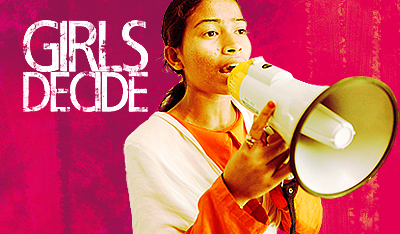
Girls Decide
This programme addresses critical challenges faced by young women around sexual health and sexuality. It has produced a range of advocacy, education and informational materials to support research, awareness-raising, advocacy and service delivery. Girls Decide is about the sexual and reproductive health and rights of girls and young women. Around the world, girls aged 10 to 19 account for 23% of all disease associated with pregnancy and childbirth. An estimated 2.5 million have unsafe abortions every year. Worldwide, young women account for 60% of the 5.5 million young people living with HIV and/or AIDS. Girls Decide has produced a range of advocacy, education and informational materials to support work to improve sexual health and rights for girls and young women. These include a series of films on sexual and reproductive health decisions faced by 6 young women in 6 different countries. The films won the prestigious International Video and Communications Award (IVCA). When girls and young women have access to critical lifesaving services and information, and when they are able to make meaningful choices about their life path, they are empowered. Their quality of life improves, as does the well-being of their families and the communities in which they live. Their collective ability to achieve internationally agreed development goals is strengthened. Almost all IPPF Member Associations provide services to young people and 1 in every 3 clients is a young person below the age of 25. All young women and girls are rights-holders and are entitled to sexual and reproductive rights. As a matter of principle, the IPPF Secretariat and Member Associations stand by girls by respecting and fulfilling their right to high quality services; they stand up for girls by supporting them in making their own decisions related to sexuality and pregnancy; they stand for sexual and reproductive rights by addressing the challenges faced by young women and girls at local, national and international levels.

05 May 2016
Tackling abortion stigma
Abortion stigma affects women and girls, abortion providers, reproductive rights advocates and communities. Although abortion is a common experience around the world, it is still largely stigmatised. Negative attitudes and beliefs about abortion may act as barriers to accessing safe services and can make it difficult for people to talk about their experiences of abortion. This can be very isolating, and may force people to continue unwanted pregnancies or to seek unsafe abortion. Since 2011 the David & Lucile Packard Foundation has supported IPPF to implement a range of initiatives to investigate and address abortion stigma. Find out more here, about the effective strategies and learning over the course of this project. It is often young people who are most severely affected by abortion stigma, and who are most at risk of suffering health complications as a result of unsafe abortion. Since 2014 IPPF has delivered a project focused on abortion stigma as it affects young people’s access to services, with targeted work in our Member Associations in Benin, Burkina Faso, India and Pakistan. This builds on previous initiatives and includes: Implementing individual, community and clinic-based interventions in the four countries where abortion stigma research was conducted under the previous grant. Abortion stigma at the community level will be measured at the beginning and end of each project using an adapted version of the Stigmatizing Attitudes, Beliefs and Actions Scale (SABAS) developed by Ipas Developing global guidance and tools to improve abortion messaging to ensure abortion is integrated into peer educator training and better raise awareness of abortion-related services to young people Building capacity of youth advocates to speak out on the right to access abortion services Generating and sharing of evidence and good practices on addressing abortion stigma In addition to the abortion stigma work supported by the Packard Foundation, the IPPF Western Hemisphere Region (WHR) has been conducting a research study in collaboration with Ibis Reproductive Health to better understand the effects that the provision of abortion-related services have on providers’ and clients’ perceptions and experiences of stigma. This research has been conducted in four countries with different legal contexts and varying degrees of access to services: the Dominican Republic, Uruguay, Colombia, and Argentina. WHR is also working with the University of Michigan to pilot facilitated group workshops to reduce stigma and foster resilience among abortion service providers in Colombia, Argentina, Bolivia, Mexico and Peru. Through this project IPPF has created a range of tools and resources to support understanding of abortion stigma and to increase the capacity of our Member Associations to advocate for safe abortion, and to provide non-stigmatising education and information. How to talk about abortion: A guide for journalists, editors and media outlets encourages accurate reporting of the facts about abortion, and honest portrayals of abortion as part of real people’s lives and relationships. How to educate about abortion: A guide for peer educators, trainers and teachers is a comprehensive guide providing the rationale for teaching about abortion issues, as well a number of practical activities for doing so. The accompanying short animation distills this advice into just two minutes! How to talk about abortion: A guide to rights-based messaging is designed to help individuals and organizations think about the language and images they use to communicate about abortion and offers best practice tips. Again, a short animation has been created to share these tips further Our Member Associations in Bosnia and Herzegovina, Cameroon, Ghana, and Pakistan have shared best practices for improving young people’s access to safe abortion services. These feature strategies based on: creating a ‘buddy system’ for young people accessing services, working with educational establishments, using social media, and youth friendly spaces respectively. In 2015, young people from IPPF Member Associations in Spain, Nepal, Macedonia, Ghana and Palestine were awarded small grants to support projects focused on tackling abortion stigma. Read more about these youth-led projects. The ‘Youth Against Abortion Stigma’ website features blogposts from young IPPF volunteers around the world. In 2017, young people from IPPF Member Associations in Guinea, Kenya, Nepal, Puerto Rico, Sierra Leone and Venezuela were awarded small grants to support youth-led projects focused on tackling abortion stigma. SEE OUR RESULTS
28 September 2025
Beyond Borders: Abortion Laws, Rights and Realities in South Asia
Safe abortion is essential healthcare and integral to a person’s sexual and reproductive health and rights (SRHR). When people have access to safe, timely and stigma-free abortion services, the risk of complications is greatly reduced. Abortion is safe, when carried out using World Health Organization–recommended methods. In South Asia, unsafe abortion is a major public health and human rights issue. As per the Guttmacher Institute, in Southern and Central Asia together, less than half of abortions are safe. Access to safe abortion services is further complicated by South Asia’s patchwork of laws, commonly situated under criminal law. Abortion regulations in South Asia range from relatively liberal laws in India and Nepal, restrictive laws in Bhutan, Pakistan and Sri Lanka. Innovative ways of regulating abortion like Bangladesh’s menstrual regulation policy, sits outside the legal framework on abortion. Abortion in South Asia: How does legal regulation look like? Taking a closer look at the regional legal landscape shows why access varies so widely. India amended the Medical Termination of Pregnancy law in 2021, expanding gestational limits for certain categories and easing some clinical rules. In 2022, a Supreme Court judgement ruled that unmarried women should have the same right to access abortion. However, abortion remains framed as a crime under the Bhartiya Nyaya Sanhita, 2023 (India’s penal law), with statutory exceptions. Abortion continues to operate under a carceral approach instead of being seen as fundamental right and a necessary healthcare service on request. Courts have sometimes stepped in to approve exceptions in difficult cases, though their approach has been inconsistent and recent judgments have rolled back earlier gains. Nepal took a progressive step in the region by legalising abortion with conditions in 2002, and later strengthened the reproductive health law under the Safe Motherhood and Reproductive Health Rights (SMRHR) Act 2018. Nepal’s Constitution too, encodes a woman’s fundamental right to reproductive health. Yet, penal provisions have not been fully removed from the National Penal Code 2017, and abortion seekers and service providers still face criminal penalties. Legal ambiguity and inconsistencies between the SMRHR Act and Penal Code continue to deprive abortion seekers from accessing safe abortion services and exercising their right to health, life and bodily autonomy. Civil society and safe abortion advocates in Nepal now call for full decriminalization, arguing that abortion is essential healthcare and a right. Bangladesh presents an interesting policy workaround. Under the Penal Code of 1860, induced abortion is only permissible to save a woman’s life, but the national family planning programme allows “menstrual regulation” (MR). The MR policy allows early termination, i.e., up to 12 weeks, without calling abortion. Framing MR as distinct from abortion has had pragmatic benefits, but access is uneven and many still resort to unsafe methods. Abortion in Bhutan, Maldives, Sri Lanka and Pakistan remains tightly restricted. Sri Lanka’s penal code criminalizes unlawful termination except to save a woman’s life, and repeated reform attempts to expand the exceptions have failed. Bhutan allows abortion under narrow grounds such as rape or risk to the woman’s life; Maldives permits abortion mainly to save a woman’s life and in cases of rape or incest under its penal code. Pakistan’s criminal code criminalises abortion except to save the life of woman or for “necessary treatment” before the organs of the foetus are formed.
28 May 2025
Neo-Colonialism by Policy: The Global Gag Rule's Impact on South Asian Reproductive Healthcare
Sexual and reproductive health equity is central to health equity—because sexual and reproductive coercion has always been a tool of patriarchal oppression. In the wake of the Trump administration reinstating the Global Gag Rule, we’re reminded of the profound inequities that persist in the global health landscape and how the Global South continues to bear the brunt of neo-colonial laws and policies to exert control over racialised bodies. The Global Gag Rule: A Cycle of Control The Global Gag Rule (GGR), also known as the Mexico City Policy, is not new to safe abortion advocates and providers. It was first implemented by the Reagan administration in 1985 and has followed a predictable pattern of being rescinded under Democratic presidents; reinstated under Republican presidents. The GGR prohibits foreign non-governmental organizations (NGOs) receiving US global health funding from offering safe abortion services, information and referrals—even when abortion is legal in their country and funded through non-US sources. It also forbids organizations from advocating for the decriminalization of abortion in their respective countries. According to a Lancet study, previous implementations of the GGR have been associated with a 40% increase in abortion rates in countries highly dependent on US foreign assistance for reproductive healthcare. This challenges the counterproductive nature of the policy. The latest iteration of the GGR, backed by conservative agendas, such as Project 2025, targets comprehensive sexual and reproductive health services, especially HIV prevention and treatment, and inclusive development initiatives. The Impact on South Asia In South Asia, the legal landscape surrounding abortion is complex and varied. While abortion is unrestricted in India, Nepal and Bangladesh under certain conditions, countries like Sri Lanka and Bhutan have highly restrictive abortion laws. The GGR's restrictions on the provision, advocacy, and education around safe abortion has historically silenced local organizations and continues to endanger the health and lives of countless women across the global South, including South Asia, by restricting access to safe abortion services. Evidence shows that every time the GGR is in effect, the number of unsafe abortions and subsequent maternal deaths increase significantly. In Bangladesh, many family planning programs rely on funding for contraceptive and reproductive health services. “When funding for these essential family planning programs is cut or delayed, it’s women in remote communities who suffer the most. Their health, rights, and dignity are put at serious risk,” says Dr. Noor Mohammad, Executive Director of the Population Services and Training Centre (PSTC). “Without consistent support, we’re leaving the most vulnerable behind.” Dr Prabin Shakya, Executive Director of the Family Planning Association of Nepal, adds, “After the abortion law was liberalised in Nepal, we have made remarkable progress in reducing maternal mortality. The Global Gag Rule undermines these hard-won gains by creating barriers for organizations providing essential reproductive healthcare services”. Moreover, the GGR will embolden homegrown opposition to abortion and reproductive rights, allowing conservative forces to further entrench patriarchal norms and restrict women's autonomy over their bodies. In this way, the GGR exacerbates existing health inequities and undermines the progress made by local organizations towards advancing reproductive justice in the region.
24 June 2022
US Supreme Court overturns Roe v Wade in devastating blow to women's health and rights
The US Supreme Court has overturned Roe v. Wade in the biggest blow to women's health and rights in recent US history, removing 50 years of constitutional protection for abortion across America, meaning individual states will now decide the legality of abortion within their jurisdiction. Twenty-six states, including Mississippi, Oklahoma, Texas and Georgia, are now poised to enact "trigger laws" that will severely limit or ban abortion, putting approximately 40 million women and girls of reproductive age at risk of losing abortion access, with lower-income people and people of color most severely affected. The patchwork of state abortion bans means those without funds to travel for safe and legal abortion services or access medical abortion pills will be forced underground to unsafe and unregulated methods, with no guarantee of quality of care or aftercare if things go wrong. The devastating rollback of reproductive rights resulted from the Dobbs v. Jackson Women's Health Organization case, a 2018 ruling that banned abortion in Mississippi after 15 weeks of pregnancy. Of the nine federal Supreme Court Justices, six voted to uphold the Mississippi law, effectively overturning Roe v. Wade, and three dissented. Dr Alvaro Bermejo, Director-General of the International Planned Parenthood Federation, said: "The Supreme Court's decision to overturn Roe v. Wade is the biggest blow to women's health and rights in recent US history and an outrageous and devastating conclusion to what was already an unconstitutional removal of life-saving healthcare. "By continuing its unbridled attack on women's bodies and forcing them to carry pregnancies to term, the highest court in the land has reached its lowest point, robbing millions of their liberty, bodily autonomy and freedom – the very values the United States prides itself on. "We know for a fact that banning abortion does not mean fewer abortions and that when abortion bans are enacted, women and pregnant people die, as we have seen across the globe, most recently in Poland. We also know that those who cannot access safe abortion care legally, including medical abortion pills, will be forced into unregulated and unsafe methods, potentially resulting in serious harm or even death and costing lives for decades to come. "The fallout from this calculated decision will also reverberate worldwide, emboldening other anti-abortion, anti-woman and anti-gender movements and impacting other reproductive freedoms. The justices who put their personal beliefs ahead of American will, precedent, and law will soon have blood on their hands, and we are devastated for the millions of people who will suffer from this cruel judgment." The overturning of Roe v. Wade also flies in the face of democracy and against the values of those the Supreme Court is meant to represent and protect, with the majority (60%) of Americans supporting Roe v. Wade and 70% believing the decision to end a pregnancy is between a woman or pregnant person and their doctor. Elizabeth Schlachter, Director of Advocacy and US representative for the International Planned Parenthood Federation, said: "The Supreme Court's perilous ruling is not just regressive but also wildly out of step with most Americans, who we know support access to abortion care. It is also at odds with much of the world, where access to abortion is expanding to reach all who need this vital health service. "By overriding the constitutional right to abortion across the US and handing the decision to each state, many parts of the US will now join El Salvador, Nicaragua, and Poland with some of the most restrictive, extremist, and life-threatening bans on abortion care in the world. "But this is not just about the anti-abortion movement in the US; this is concerted and calculated global effort by anti-women, anti-gender, anti-LGBTQI+ conservative and religious, white supremacist extremists, who are using dark money and undemocratic means to deny people their human right to healthcare, equality, bodily autonomy and ultimately, freedom. "With long-held rights under sustained attack, the International Planned Parenthood Federation is imploring governments across the globe to do more to protect democracy and peoples' freedoms from the interference and influence of these extremist groups." The International Planned Parenthood Federation's (IPPF) Member Association, the Planned Parenthood Federation of America (PPFA), continues to provide services to all who need them where legally possible, including via telemedicine for medical abortion pills. IPPF and PPFA will also continue to work around the clock to protect the rights of all people both in the US and globally, fighting extremism at its core and ensuring that women and pregnant people will not be forced to carry a pregnancy or give birth against their will. To help keep abortion legal, safe, and accessible, you can donate to the International Planned Parenthood Federation or Planned Parenthood Federation of America. For media enquiries, please contact Karmen Ivey on [email protected] or [email protected] About the International Planned Parenthood Federation The International Planned Parenthood Federation (IPPF) is a global service provider and advocate of sexual and reproductive health and rights for all. For over 65 years, IPPF, through its 118 Member Associations and 15 partners, has delivered high-quality sexual and reproductive healthcare and helped advance sexual rights, especially for people with intersectional and diverse needs that are currently unmet. Our Member Associations and partners are independent organizations that are locally owned, which means the support and care they provide is informed by local expertise and context. We advocate for a world where people are provided with the information they need to make informed decisions about their sexual health and bodies. We stand up and fight for sexual and reproductive rights against those who seek to deny people their human right to bodily autonomy and freedom. We deliver care rooted in rights, respect, and dignity - no matter what.
30 March 2017
Safe Abortion Action Fund
The Safe Abortion Action Fund (SAAF) was established in 2006, in response to the US government's Global Gag Rule, as a multi‑donor mechanism to support global abortion‑related programming. Hosted by IPPF, SAAF provides small grants to locally-run organisations that promote safe abortion and prevent unsafe abortion through advocacy and awareness raising, service delivery and research activities, and has supported such projects for over a decade. SAAF Supports projects run by IPPF Member Associations as well as other organisations not affiliated with IPPF. By the end of 2016 SAAF had provided US$43 million funding to 188 projects in over 62 countries. SAAF focuses on the needs of the marginalized and most vulnerable women and girls. By visibly funding projects using an international funding mechanism, SAAF works to destigmatize abortion and to legitimize the abortion debate. For more information about the fund visit the SAAF website www.saafund.org.
30 June 2016
Girls Decide
This programme addresses critical challenges faced by young women around sexual health and sexuality. It has produced a range of advocacy, education and informational materials to support research, awareness-raising, advocacy and service delivery. Girls Decide is about the sexual and reproductive health and rights of girls and young women. Around the world, girls aged 10 to 19 account for 23% of all disease associated with pregnancy and childbirth. An estimated 2.5 million have unsafe abortions every year. Worldwide, young women account for 60% of the 5.5 million young people living with HIV and/or AIDS. Girls Decide has produced a range of advocacy, education and informational materials to support work to improve sexual health and rights for girls and young women. These include a series of films on sexual and reproductive health decisions faced by 6 young women in 6 different countries. The films won the prestigious International Video and Communications Award (IVCA). When girls and young women have access to critical lifesaving services and information, and when they are able to make meaningful choices about their life path, they are empowered. Their quality of life improves, as does the well-being of their families and the communities in which they live. Their collective ability to achieve internationally agreed development goals is strengthened. Almost all IPPF Member Associations provide services to young people and 1 in every 3 clients is a young person below the age of 25. All young women and girls are rights-holders and are entitled to sexual and reproductive rights. As a matter of principle, the IPPF Secretariat and Member Associations stand by girls by respecting and fulfilling their right to high quality services; they stand up for girls by supporting them in making their own decisions related to sexuality and pregnancy; they stand for sexual and reproductive rights by addressing the challenges faced by young women and girls at local, national and international levels.
05 May 2016
Tackling abortion stigma
Abortion stigma affects women and girls, abortion providers, reproductive rights advocates and communities. Although abortion is a common experience around the world, it is still largely stigmatised. Negative attitudes and beliefs about abortion may act as barriers to accessing safe services and can make it difficult for people to talk about their experiences of abortion. This can be very isolating, and may force people to continue unwanted pregnancies or to seek unsafe abortion. Since 2011 the David & Lucile Packard Foundation has supported IPPF to implement a range of initiatives to investigate and address abortion stigma. Find out more here, about the effective strategies and learning over the course of this project. It is often young people who are most severely affected by abortion stigma, and who are most at risk of suffering health complications as a result of unsafe abortion. Since 2014 IPPF has delivered a project focused on abortion stigma as it affects young people’s access to services, with targeted work in our Member Associations in Benin, Burkina Faso, India and Pakistan. This builds on previous initiatives and includes: Implementing individual, community and clinic-based interventions in the four countries where abortion stigma research was conducted under the previous grant. Abortion stigma at the community level will be measured at the beginning and end of each project using an adapted version of the Stigmatizing Attitudes, Beliefs and Actions Scale (SABAS) developed by Ipas Developing global guidance and tools to improve abortion messaging to ensure abortion is integrated into peer educator training and better raise awareness of abortion-related services to young people Building capacity of youth advocates to speak out on the right to access abortion services Generating and sharing of evidence and good practices on addressing abortion stigma In addition to the abortion stigma work supported by the Packard Foundation, the IPPF Western Hemisphere Region (WHR) has been conducting a research study in collaboration with Ibis Reproductive Health to better understand the effects that the provision of abortion-related services have on providers’ and clients’ perceptions and experiences of stigma. This research has been conducted in four countries with different legal contexts and varying degrees of access to services: the Dominican Republic, Uruguay, Colombia, and Argentina. WHR is also working with the University of Michigan to pilot facilitated group workshops to reduce stigma and foster resilience among abortion service providers in Colombia, Argentina, Bolivia, Mexico and Peru. Through this project IPPF has created a range of tools and resources to support understanding of abortion stigma and to increase the capacity of our Member Associations to advocate for safe abortion, and to provide non-stigmatising education and information. How to talk about abortion: A guide for journalists, editors and media outlets encourages accurate reporting of the facts about abortion, and honest portrayals of abortion as part of real people’s lives and relationships. How to educate about abortion: A guide for peer educators, trainers and teachers is a comprehensive guide providing the rationale for teaching about abortion issues, as well a number of practical activities for doing so. The accompanying short animation distills this advice into just two minutes! How to talk about abortion: A guide to rights-based messaging is designed to help individuals and organizations think about the language and images they use to communicate about abortion and offers best practice tips. Again, a short animation has been created to share these tips further Our Member Associations in Bosnia and Herzegovina, Cameroon, Ghana, and Pakistan have shared best practices for improving young people’s access to safe abortion services. These feature strategies based on: creating a ‘buddy system’ for young people accessing services, working with educational establishments, using social media, and youth friendly spaces respectively. In 2015, young people from IPPF Member Associations in Spain, Nepal, Macedonia, Ghana and Palestine were awarded small grants to support projects focused on tackling abortion stigma. Read more about these youth-led projects. The ‘Youth Against Abortion Stigma’ website features blogposts from young IPPF volunteers around the world. In 2017, young people from IPPF Member Associations in Guinea, Kenya, Nepal, Puerto Rico, Sierra Leone and Venezuela were awarded small grants to support youth-led projects focused on tackling abortion stigma. SEE OUR RESULTS